Why Your Golf Swing Feels Stuck: The Four Physical Limitations Behind Common Swing Faults


Introduction: Your Swing Is Only as Strong as Your Body
Keep your head down, turn your back away from the target, load into your trail side, feel the coil; the list of 'phrases' goes on and on. Some of these phrases can be beneficial. However, time spent chasing phrases that attempt to perfect swing technique might be better served understanding your body-swing connection. Consider swing faults. From the outside, a swing fault—like a reverse spine angle, sway, or early extension—may look technical. But in many cases, these faults are a direct result of the body's physical limitation preventing rotation, stabilization and the transfer of force through your swing.
Improving physical limitations are a major opportunity for most golfers (even PGA Tour Professionals). The golf swing needs mobility, stability, strength, speed, power, coordination and balance foundationally. When range of motion is restricted (hips, thoracic spine, core, and shoulders etc) it can create a swing where movements are forced lending itself to inconsistency and injury potential. Even the best instruction will not be able to compensate for a body that cannot meet the demands of a high-speed rotational and explosive movement.
This article explains four key physical limitations behind common swing faults: why they matter for distance, accuracy, repeatability, longevity and also how corrective exercises powered by assessment build better performance.
Biomechanics and Your Best Golf
A golfer’s swing mechanics are only as repeatable as their physical ability. The golf swing is a rotational movement powered from the ground up, through the legs and transferring energy to the pelvis, spine, upper back, and arms to the club face.
When any link in this chain is restricted, the body adapts: if the back foot slides, the lead leg during the downswing cannot stabilize, or the upper body compensates, creating a swing path that is out-to-in, leading to thin shots, shanks, or poor contact.
Even a PGA Tour golfer with excellent coaching may experience loss of distance, inconsistent ball contact, and reduced accuracy if their body cannot rotate or lacks stability.
Studies and experience from the Titleist Performance Institute confirm that low-handicap golfers have higher glute strength, better weight transfer, and efficient swing plane, allowing them to achieve a consistent golf swing and repeatable ball flight.
Limitation 1: Hip Mobility - Internal and External Rotation

What It Is
Limited hip mobility restricts the body to rotate effectively during both the backswing and downswing. This restriction prevents the lower body from stabilizing, which is critical for generating power and maintaining posture.
How It Sabotages Your Swing
- Can cause sway or loss of balance as the lower body stability fails.
- Can lead to early extension and a reverse spine.
- Reduces weight shift toward the target during the downswing, causing loss of power and loss of distance.
Self-Test
Perform the Supine 90/90 hip rotation test: lie on your back with knees bent 90° and let them swing in and out. Restricted motion indicates a hip limitation that can affect your ability to swing the club and hit the ball squarely.
Corrective Approach
- Hip mobility drills and dynamic stretches.
- Strengthen glutes and stability to control pelvis motion and improve weight transfer.
Improving hip internal and external rotation allows golfers to maintain proper weight on the back foot, stabilize the legs, and produce consistent clubhead speed for better golf improvement.
Limitation 2: Core Stability and Weak Glutes
What It Is
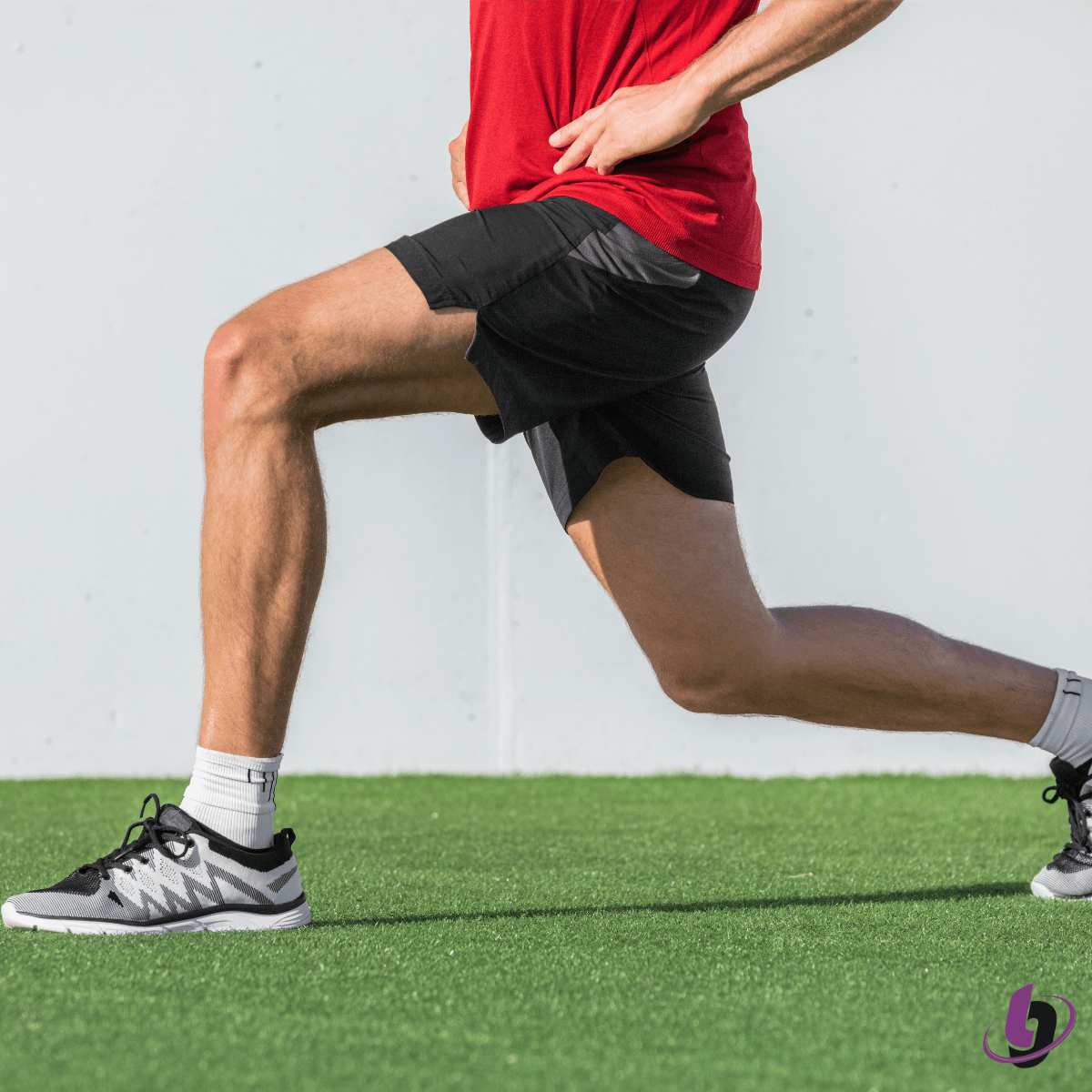
Weak glutes and insufficient core strength can limit the body on the downswing, impairing the ability to stabilize the spine and lower body during rotation.
How It Sabotages Your Swing
- Potentially leads to hang back and early extension, reducing power and direction.
- Forces the upper body to overcompensate, for example causing out-to-in swing paths and thin shots.
- Creates inconsistent contact even with desired swing plane
Self-Test
Single-leg balance or bridges with leg extension.
Pallof press or rotational planks to test core.
Corrective Approach
- Glute activation and strength training.
- Anti-rotation and rotational exercises for strength and stability.
- Combine with physical therapy or golf fitness team to ensure safe progression.
Strong glutes and core help golfers maintain posture, stabilize the lower half during the downswing, and achieve a repeatable swing with proper weight shift.
Limitation 3: Thoracic and Shoulder Mobility
What It Is
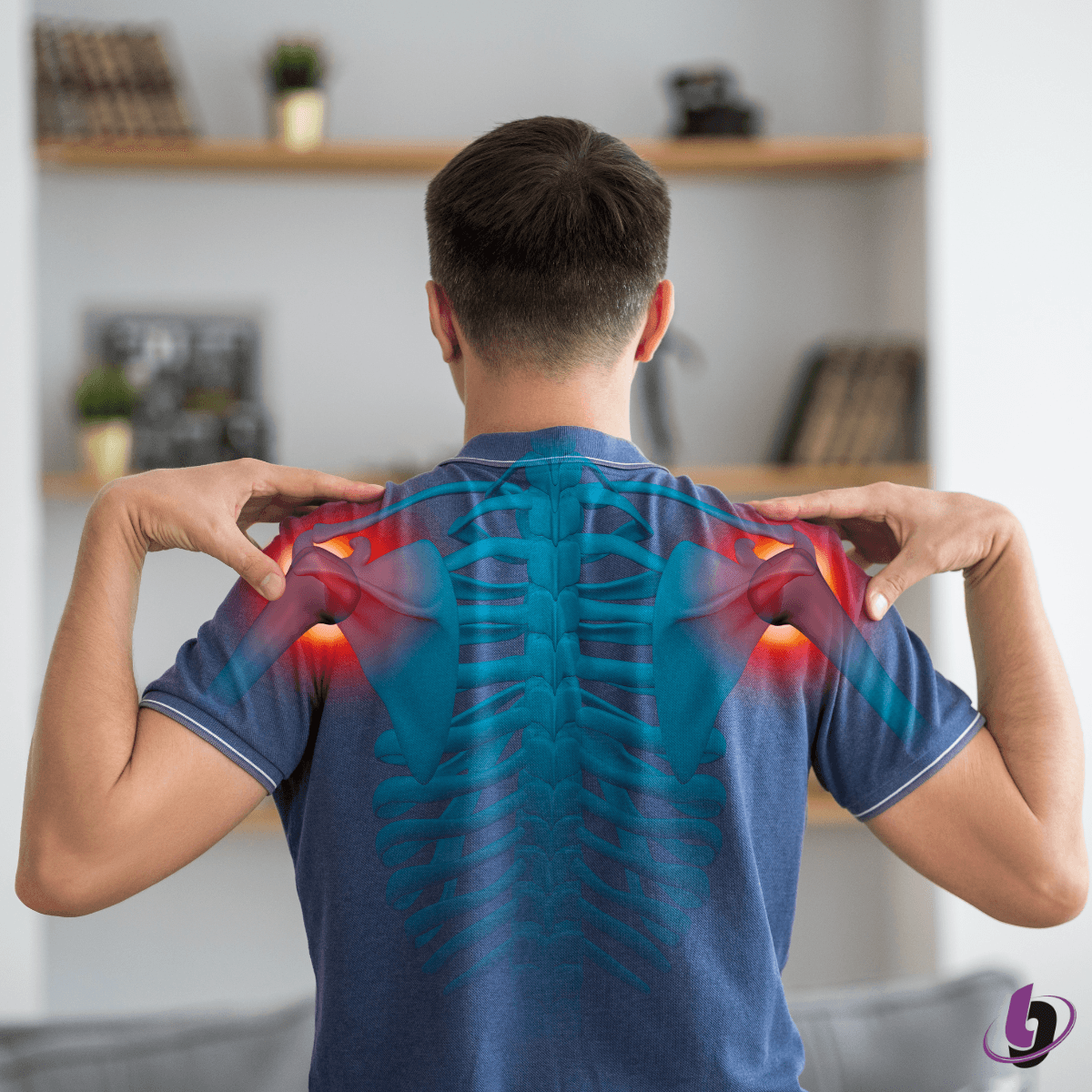
Restricted thoracic rotation and limited mobility in the shoulders impede upper back rotation, making it hard to maintain swing plane and turning away from the target during the backswing.
How It Sabotages Your Swing
- Can cause reverse spine angle and early extension.
- Potentially reduces the length of your backswing, limiting swing length and consistency.
- Promotes over the top motions and out-to-in swing paths, creating thin shots or slices away from the target.
Self-Test
Seated thoracic rotation with pelvis fixed.
Corrective Approach
- Thoracic rotation and shoulder drills.
- Combine with core and glute activation for lower body stability.
Improving thoracic and shoulder mobility allows the golfer to maintain setup and dynamic posture, proper tilt, and weight transfer, delivering the club face squarely to the ball.
Limitation 4: Upper/Lower Body Disassociation
What It Is
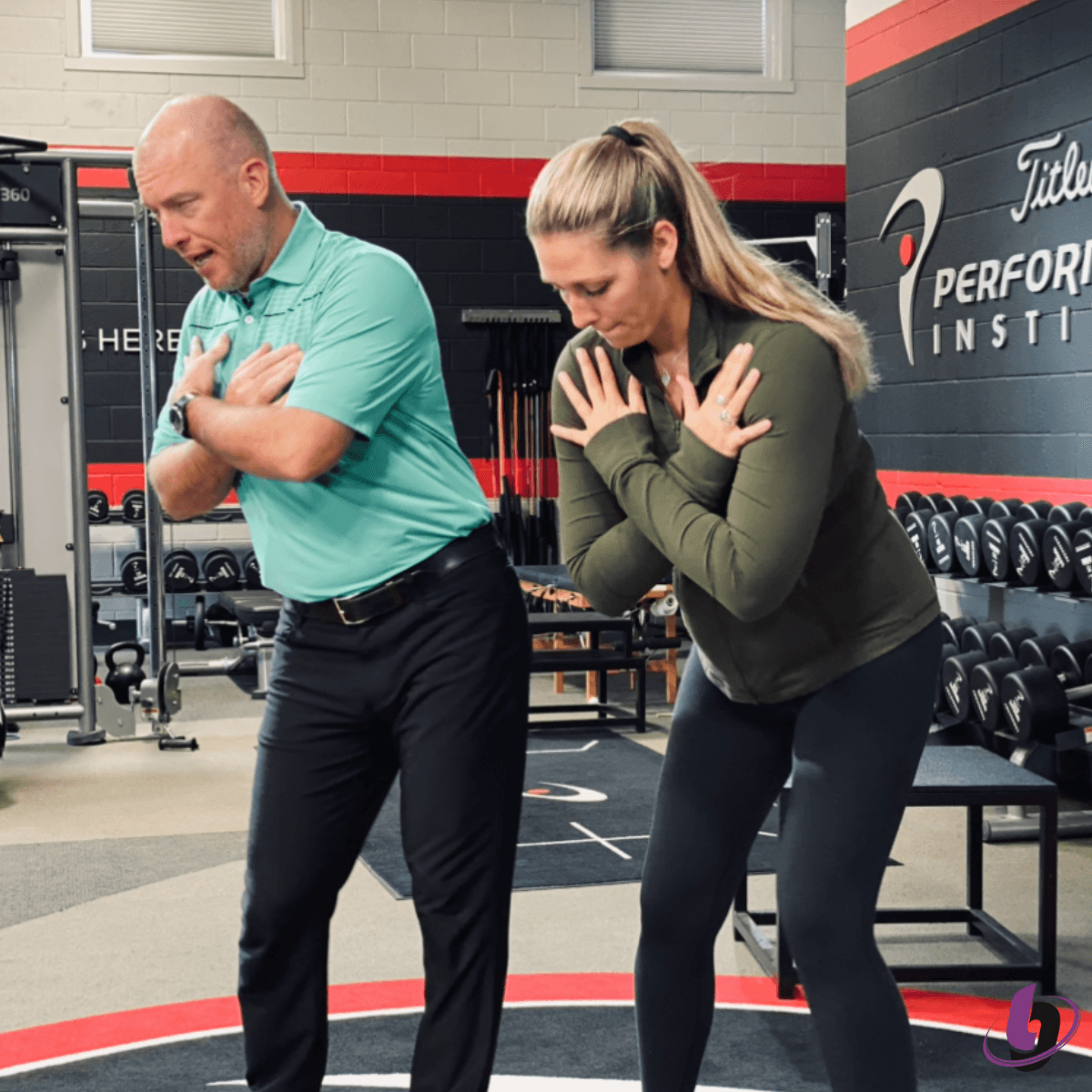
The ability to rotate the upper body independently of the lower body (and vice versa) is essential for generating torque, clubhead speed, and a repeatable golf swing.
How It Sabotages Your Swing
- Breaks sequencing in the downswing.
- Kills distance and creates shank or inconsistent contact.
- Limits ability to rotate the body and engage the lead leg fully, forcing compensations from the lower back or upper body.
Self-Test
Seated trunk rotation with pelvis fixed. Limited rotation indicates insufficient separation for repeatability and consistency.
Corrective Approach
- Drills to increase disassociation (seated rotations, cable chops, step-through swings).
- Strengthen glutes and core to support lower body stability.
- Work on shoulder mobility and thoracic rotation to enhance range of motion.
Proper separation ensures the legs to stabilize while the upper body is coiled correctly, improving power and accuracy.
Putting It All Together: Improve Your Swing Through the Body
The golf swing is a product of the body. You should take lessons and follow golf instruction, but without addressing these physical limitations, swing improvements are potentially going to be limited.
- Identify your common swing faults: hang back, reverse spine, over the top, sway, early extension etc.
- Match faults to limitations:
- Hang back → weak glutes, poor upper stability
- Reverse spine angle → limited thoracic rotation, poor shoulder mobility
- Come over the top → poor separation, limited swing plane
- Seek a golf-specific assessment with your Golf Fitness Team or healthcare provider.
- Implement corrective exercises to improve mobility, stability, and strength.
Golfers who address these four limitations improve their swing, make contact with the ball more consistently, and maximize power and accuracy on the golf course.
Key Takeaways
- Many common swing faults are physical, not technical.
- Correcting physical limitations allows your swing mechanics to flow naturally.
- Combine mobility, stability, strength and separation drills for a consistent swing.
- Assessment is critical: it provides the blueprint to improve your body and swing efficiently.
Fix the body first, and the swing will follow. You will hit the golf ball farther, straighter, and more consistently when you understand that your body is the real driver of performance.
Ready to get behind the ball with confidence? Schedule your free strategy call.